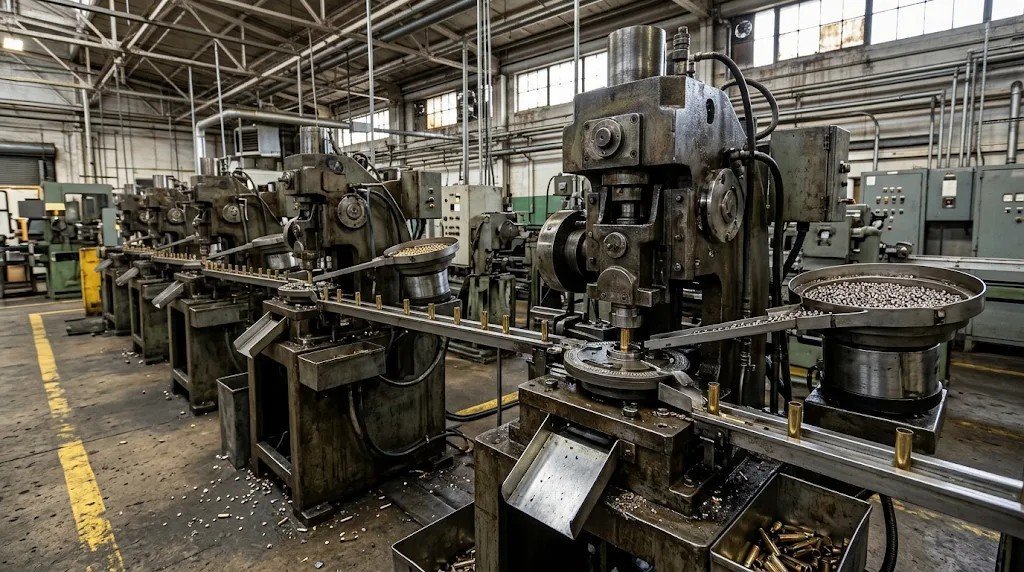
A primer inserting machine is specialized industrial equipment associated with ammunition manufacturing. Its general purpose is primer placement, while its specific capabilities and limitations depend on the manufacturer’s documented equipment scope. Understanding the product category also requires attention to operator responsibilities, equipment records, and maintenance documentation.
For readers asking “How does a primer inserting machine work?”, this overview addresses the equipment at a non-operational level. It does not describe internal mechanisms, processing sequences, technical settings, or ammunition production instructions.
A product description for Yeter Makina should distinguish confirmed machine characteristics from general industry terminology. This distinction helps readers understand the equipment without attributing unverified capabilities to a particular model.
The declared purpose of a primer inserting machine defines the boundaries of its intended industrial role.
A product name provides a general classification, but it does not establish every capability of the equipment. The relevant model documentation should explain the manufacturer’s intended scope and any stated limitations.
Descriptions should avoid extending a machine’s purpose beyond the information available. A feature documented for one model should not automatically appear in the presentation of another.
This approach also supports consistency across product pages, brochures, and internal records. Readers should encounter the same description of the equipment regardless of which document they consult.
Equipment descriptions often contain broad expressions such as automation, monitoring, and control. These terms require context because they do not establish specific capabilities independently.
An operator interface, for example, does not necessarily include remote access, historical reporting, or data export. Similarly, the presence of a monitoring function does not establish comprehensive product inspection or guarantee uninterrupted equipment availability.
Each published feature should have a clear meaning and a supporting reference. Where documentation is incomplete, the description should acknowledge the information gap rather than replace it with a promotional claim.
|
Information category |
What readers should understand |
Supporting information |
|---|---|---|
|
Equipment identity |
Which model the description covers |
Model-specific documentation |
|
Intended purpose |
The manufacturer’s declared scope |
Product description |
|
Operator interface |
Confirmed user interaction features |
Relevant equipment documentation |
|
Recordkeeping |
What information is retained, if applicable |
Documented feature description |
|
Maintenance information |
Available guidance and assigned responsibilities |
Maintenance documentation |
|
Support scope |
The assistance covered by an agreement |
Written service terms |
Equipment documentation provides a reference for understanding the machine throughout its ownership lifecycle.
Documents should identify the applicable model, revision status, and issuing party. These details help distinguish current information from earlier versions and prevent unrelated instructions from circulating together.
For Yeter Makina, product statements should remain consistent with the documentation supplied for the relevant equipment. Claims about included functions, available records, or support arrangements should reflect confirmed information.
Document control also involves ownership. An organization should identify who maintains the approved reference set and how personnel receive authorized revisions. Retaining outdated information without clear labeling can create avoidable uncertainty.
A machine operates within an organization that assigns responsibilities for personnel preparation, documentation, maintenance coordination, and oversight.
Employees need a clear understanding of their authorized roles. General familiarity with industrial equipment does not establish competence for every responsibility associated with a specialized machine.
Management should also define how concerns are reported and reviewed. Personnel need an identifiable route for raising questions about documentation, equipment condition, or assigned duties.
Training records should describe the preparation provided and the responsibilities covered. Attendance alone offers limited evidence; the organization also needs an appropriate basis for confirming that personnel understand their roles.
An equipment history preserves information that may otherwise become fragmented across departments, service communications, and individual employees.
Relevant records can include maintenance activity, authorized modifications, document revisions, and reported concerns. Each entry should remain connected to the correct equipment identity.
Records should distinguish observations from confirmed findings. A reported symptom does not, by itself, establish a cause or justify a particular intervention.
Maintenance decisions require equipment-specific documentation and qualified assessment. A general product article cannot determine a machine’s condition or establish its readiness for use. Keeping those judgments within the appropriate professional process supports accountable equipment management.
An informative presentation of Yeter Makina machinery should explain the product category while keeping model-specific statements tied to evidence. Unsupported claims about performance, compatibility, or service coverage can obscure the information readers actually need.
A useful primer inserting machine overview therefore combines a concise statement of purpose with clear documentation and ownership responsibilities. Understanding how a primer inserting machine works at this general level begins with knowing what the manufacturer declares, what the available records establish, and which questions require qualified review.
