Modern manufacturing environments rely heavily on high-accuracy verification systems, and the concept of a Manual Inspection Machine for Reliable Quality Control represents one of the most flexible and detail-oriented tools available for defect elimination. By integrating optical precision, ergonomic operator support and methodical inspection workflows, these systems provide a reliable layer of protection against production errors. Unlike fully automated solutions, a refined manual inspection station captures nuanced surface abnormalities, micro-geometric deviations and complex defect patterns that require human judgment.
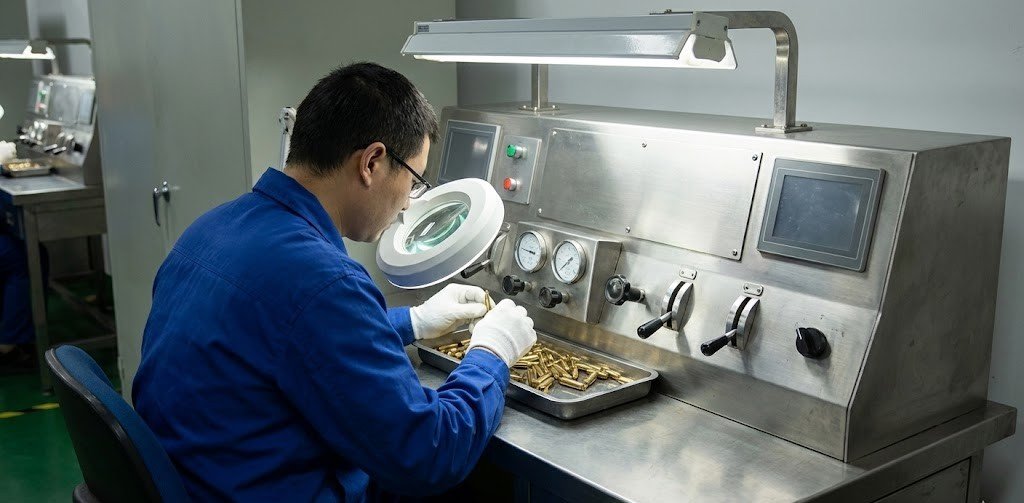
An effective manual inspection machine enables an operator to evaluate surface integrity, dimensional consistency, assembly accuracy and functional elements with a controlled combination of visual and tactile assessment. It ensures reliable quality control by allowing precise identification of defects that may compromise product safety, performance or longevity. This direct definition highlights the system’s technical role while outlining the practical value of a structured human-assisted inspection environment.
Such systems achieve accuracy through ergonomic designs that support eye alignment, stable hand positioning and adjustable viewing angles. When product geometry, material texture or reflectivity becomes challenging, the machine’s adaptability allows operators to maintain consistent inspection standards. This flexibility is essential in industries where defect patterns vary widely or where production runs include high-mix, low-volume components.
Under controlled lighting and magnification, the human eye often surpasses automated cameras in recognizing subtle, low-contrast imperfections. Experienced inspectors can distinguish organic, irregular or spontaneous defects more effectively than machine-learning models. Examples include:
These intricate anomalies may elude automated algorithms, yet skilled operators detect them quickly using visual memory, pattern recognition and contextual reasoning. This capability is one of the primary reasons manual inspection machines remain integral to industries with strict tolerance limits.
Manual inspection stations frequently serve as data sources for Statistical Process Control (SPC). Trends in defect frequency, variation patterns, supplier-related inconsistencies and equipment wear become visible through accumulated inspection data. When interpreted correctly, these insights help stabilize the production cycle, reduce waste and enhance customer satisfaction by preventing recurring failures.
A well-designed manual inspection machine integrates multiple components that work together to support operator performance and consistent defect detection. These components ensure a stable and repeatable inspection environment regardless of operator variability.
Typical systems include:
Each component plays a significant role in controlling how the product is viewed, manipulated and evaluated.
Lighting is the primary determinant of product visibility and defect contrast. Industrial inspection processes depend on controlled illumination to enhance the appearance of surface irregularities. Three core lighting strategies are commonly used:
Lighting intensity, color temperature and diffusion level must be calibrated for the specific product class. For example, highly reflective polymer surfaces require soft, diffused light to minimize glare, while textured metal components benefit from angled, high-contrast illumination.
Magnification tools empower operators to detect micro-scale anomalies with high clarity. Common options include:
To reduce visual fatigue, machines incorporate ergonomic tilt mechanisms and adjustable viewing heights. This ensures consistent focus and minimizes distortion during prolonged inspection cycles. Angle control further enhances defect visibility by manipulating shadow behavior on textured surfaces.
A stable inspection platform is essential for accurate evaluation. Fixtures may include multi-point clamping surfaces, magnetic plates, vacuum-based locking systems or custom jigs tailored to product geometry. These mechanisms prevent unwanted movement and allow operators to inspect each area of the product methodically without repositioning difficulties.
Modern manual inspection machines integrate intuitive interface panels that enable operators to enter defect codes, capture annotated images, review past inspection results and generate digital reports. This digital ecosystem strengthens traceability, ensures consistent defect classification and simplifies audit processes.
Manual inspection systems vary widely depending on the required precision level, product architecture and industry regulations. Categorizing these machines helps manufacturers select the appropriate configuration for their workflow.
These systems enhance natural vision with optical aids, enabling the operator to detect surface defects, color inconsistencies and micro-geometric variations. High-magnification devices are common in electronics, medical device assembly and micro-mechanical manufacturing.
Mechanical stations rely on tactile and dimensional measurement tools rather than optical enhancement. They often include reference gauges, manual jigs and calibrated contact tools that verify angles, hole alignment, assembly fit and tolerance consistency. This approach is especially valuable for complex geometries where automation struggles to measure subtle mechanical interplay.
Hybrid solutions combine mechanical measurements with optical verification methods. They provide both surface-level and structural inspection capabilities in a single workstation. These systems are widely used in aerospace hardware, surgical instrument manufacturing, precision tooling and advanced micro-assembly operations.
Portable units are designed for in-field service tasks, maintenance checks and on-line quality verification. They include compact lighting, battery power and lightweight optical elements. Mobility makes them ideal for distributed manufacturing environments or large-scale assemblies.
Manual inspection systems play a vital role in industries where tolerances are minimal and failure risks are unacceptable. The combination of human judgment and structured inspection methodology ensures high reliability across a broad range of applications:
Each of these industries demands highly consistent inspection accuracy due to strict regulatory requirements or end-user safety concerns.
Standardization ensures that every operator performs inspections with the same criteria, sequence and evaluation thresholds. Structured methodology reduces variability and strengthens quality system integrity.
A typical standardization framework includes:
This framework enhances repeatability and minimizes subjective interpretation.
Training programs shape the inspector’s ability to differentiate between acceptable variation and genuine defects. Well-structured modules typically include:
When training is standardized, variability between operators decreases significantly, improving overall system reliability.
Ambient conditions strongly influence operator performance. Excessive glare, noise, temperature fluctuations or vibration can reduce concentration and impair vision. To counter these effects, manual inspection machines may incorporate:
Enhanced ergonomics also increase detection rates by minimizing physical strain.
Manual inspection systems offer advantages that automated systems often cannot replicate, particularly in environments requiring adaptive reasoning and sensory feedback.
New product variants can be inspected quickly without major system reconfiguration. This makes manual inspection ideal for prototype testing, small-batch production and shifted product schedules.
Automated inspection depends on predefined algorithms, while human operators can interpret unexpected defect patterns using contextual knowledge. This immediate decision-making capability reduces false acceptance rates and improves defect capture.
Certain defects are detectable only through touch, especially on matte surfaces or textured materials. Operators can sense slight roughness, micro-indentations or assembly looseness that cameras may overlook.
Manual inspection machines require far lower upfront investment than complex automated systems. Because they significantly reduce scrap and rework, they deliver fast ROI even in demanding industries.
Advanced inspection setups use a combination of workflow design, reference materials and digital tools to improve accuracy and throughput.
Inspection sequences define the order in which surfaces, angles or components should be evaluated. A structured sequence improves repeatability and reduces the likelihood of missing critical zones.
Typical sequences include:
Consistency in sequence increases accuracy across multi-shift operations.
Reference boards provide physical samples of acceptable, borderline and unacceptable defects. These boards improve operator confidence and speed by clarifying defect boundaries.
Some manual systems include software modules that enhance captured images by adjusting contrast, sharpening outlines and recording annotations. These tools reinforce accurate decision-making while creating traceable documentation.
Product reliability reflects long-term performance, failure rate, durability and aesthetic quality. Manual inspection machines strengthen reliability by removing early-stage failures and detecting subtle imperfections before they escalate.
Manual inspection enhances reliability at multiple stages:
This comprehensive visibility prevents overlooked defects from progressing through the manufacturing chain.
Industries such as aerospace, medical instrumentation and automotive safety systems cannot tolerate undetected defects. Manual inspection stations act as a critical safeguard, capturing anomalies that automated systems may miss due to programming limits or surface variability.
