Modern manufacturing environments rely on end-to-end production ecosystems that merge mechanical accuracy, digital intelligence and continuous process control. Full-Line Industrial Production Machines From Start To Finish represent an integrated engineering philosophy in which raw materials travel through preparation, forming, assembly, inspection and packaging without interruption. Each transformation stage operates under synchronized tolerances, creating an environment where throughput, dimensional repeatability and operational safety coexist with data-driven decision systems. This architecture enables manufacturers to achieve greater consistency, reduced waste and measurable improvements in cycle-time performance across large-scale production scenarios.
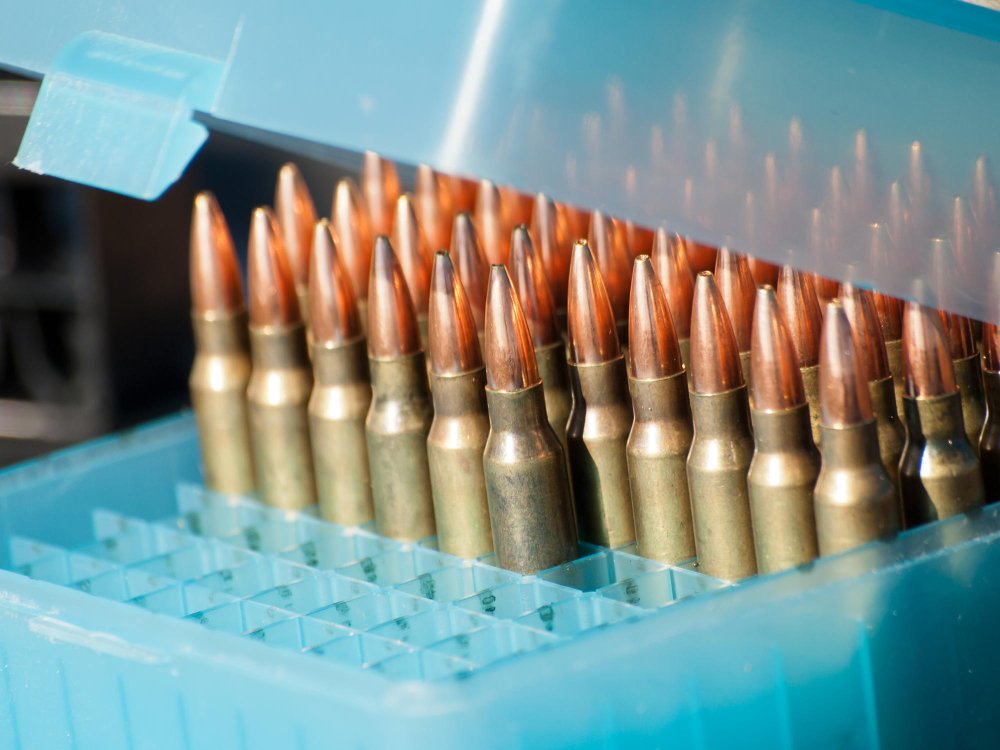
An end-to-end production system provides stability by coordinating motion control, thermal behavior, lubrication conditions, force profiles and measurement feedback within a single operational rhythm. The immediate benefit is predictable transformation behavior in each station, which minimizes dimensional drift and mechanical stress accumulation. Fleet reports from high-output industrial plants often show defect reduction rates of 20–30% once isolated stations are replaced with integrated full-line architectures. These improvements originate from real-time data exchange between machines, ensuring that deviations detected at one stage are corrected before they propagate downstream.
When every module—from raw material preparation to final packaging—communicates through unified control logic, the entire production chain behaves like a coordinated mechanical ecosystem. Even a brief delay in sensor response can influence thickness, density distribution or alignment accuracy. Adaptive loops interpret load curves, velocity profiles and temperature gradients to maintain consistent outcomes even during high-speed operation. Real-time adjustments protect structural integrity and dimensional stability, forming the backbone of scalable industrial performance.
A complete full-line industrial system organizes operations into sequential zones where raw materials evolve through controlled mechanical, thermal and assembly processes. The functional architecture typically includes:
Each zone influences the next, and the continuity between them determines the final product’s quality profile. Plants that maintain strict transitions between zones experience superior stability in mechanical performance indicators.
High-speed lines often generate thousands of data points per minute. These values—covering dimensions, loads, surface metrics and thermal conditions—feed into predictive models that highlight anomalies long before they result in scrap. As manufacturing intelligence grows, the line becomes progressively self-correcting, strengthening the relationship between machine capability and quality outcome.
A modern full-line production system distinguishes itself through automation depth, modular scalability and its ability to maintain micro-level tolerances under continuous load. Mechanical sensitivity is replaced by digitally guided motion curves, vision analysis and adaptive algorithms capable of stabilizing the process in milliseconds. The defining characteristic is the fusion of physical tooling with software-driven correction.
High-speed cameras, smart sensors and PLC-based controllers transform traditional machines into intelligent nodes. This shift enables rapid intervention whenever tooling wear, temperature drift or force irregularity appears. The result is a system that continuously recreates optimal operating conditions regardless of production volume or material variability.
Modular design allows plants to reconfigure production lines without dismantling core machinery. Each module integrates its own measurement and diagnostic infrastructure, allowing swift transitions when production demands shift.
Manufacturers implementing modular clusters report several measurable advantages:
Modularity also enables parallel maintenance strategies. Instead of pausing an entire line, individual modules can be isolated for cleaning, alignment or component replacement, preserving overall productivity.
Full-line systems depend on automation layers that manage motion, sensing, supervision and analytics. PLC platforms track pressures, speeds and tool positions; SCADA software oversees energy states, alarms and environmental monitoring; IoT nodes distribute sensor intelligence across the line.
High-resolution cameras detect dimensional deviations invisible to the human eye, while servo drives correct each variation within a few cycles. This rapid stabilization minimizes scrap rates and ensures repeatability even in continuous 24/7 operation. Operators interact through consolidated dashboards, reducing human error and simplifying oversight.
Modern factories evaluate performance through metrics that balance output speed with quality, consistency and equipment availability. Representative KPIs include:
|
Metric |
Definition |
Critical Range |
|
OEE |
Overall equipment efficiency |
70–90% |
|
CTQ Dimensions |
Critical tolerances across forming or assembly |
±0.01–0.03 mm |
|
Assembly Alignment |
Precision of component positioning |
±0.02 mm |
|
Material Feed Stability |
Uniformity of feed mechanisms |
±0.5% variation |
|
Joint Integrity Load |
Mechanical retention strength |
Defined by product class |
Each metric influences structural behavior, reliability and downstream usability in industrial applications.
Raw material preparation represents the foundation of consistent manufacturing. Variations in hardness, moisture content, surface topology, width or thickness influence forming behavior during high-speed mechanical operations.
Laser metrology and micro-surface scanners detect imperfections as small as 0.1 mm, identifying irregularities that may expand under mechanical stress. Industrial statistics show that plants with advanced pre-processing systems exhibit 25–40% fewer structural discontinuities during forming operations.
Lubrication quality dictates friction, heat generation and tool longevity. Balanced lubrication can reduce load fluctuations by up to 30%, improving thickness uniformity and extending tool life. Controlled humidity and temperature protect material characteristics, ensuring predictable deformation behavior.
The forming phase determines dimensional accuracy, thickness distribution and surface integrity. Each pump stroke, thermal cycle and alignment action contributes to the final shape’s consistency.
Press force deviations of just a few kilonewtons can alter diameter, curvature or wall uniformity. Precision die alignment supported by high-speed lubrication maintains stable internal geometry. Measurement scan intervals—often every few thousand units—capture evolving patterns in machine behavior to prevent escalation.
Intermediate heat treatment restores ductility after mechanical stress accumulation. Temperature windows of several hundred degrees Celsius are maintained through adaptive burners or induction systems to prevent micro-cracking. Controlled cooling preserves structural uniformity essential for downstream assembly.
Trim tolerances within ±0.02 mm contribute to internal volume consistency and geometric predictability. CNC-guided deburring eliminates micro-protrusions that interfere with assembly alignment or cause intermittent friction during automated handling.
Assembly phases link components into unified structures with defined mechanical, functional and geometric properties. Automated positioning systems regulate pressure, depth, distance and force.
Servo-driven alignment systems maintain positional accuracy within microns. This precision improves load distribution, vibration behavior and long-term stability. Plants that transition to fully automated alignment report up to 35% improvements in cycle consistency.
Retention forces must remain within specific ranges to prevent structural separation or compression-related deformation. Multi-axis sensors monitor force profiles and automatically compensate for material variability.
Real-time inspection replaces post-production verification in advanced factories. Vision systems capturing thousands of frames per second examine dimensions, edges, alignment and contours.
Laser diameter and distance sensors with ±5-micron accuracy maintain compliance during high-speed cycles. High-speed cameras detect anomalies such as eccentricity, misalignment, deflection or micro-surface inconsistencies.
Eddy-current scanning identifies internal discrepancies, detecting up to 80% of latent anomalies that would otherwise remain invisible. This enhances long-term reliability across diverse industrial components.
Periodic samples undergo mechanical loading, vibration testing, thermal cycling and durability analysis. Statistical dispersion values guide maintenance and calibration schedules, creating a closed-loop improvement structure.
Packaging becomes an intelligent extension of the production line. Automated systems classify units based on geometry, surface quality and orientation before placing them into protective containers.
Robotic arms sort components while image-based evaluators verify integrity. Dimension-based classification ensures compatibility between parts and packaging formats, improving transport efficiency.
Each package receives a unique identifier connected to raw material batches, spacing conditions, tool wear data and environmental records. This traceability supports root-cause diagnosis, warranty processes and continuous improvement.
Predictable maintenance schedules maintain uptime and performance. Data from vibration analysis, thermography and lubrication particle inspection guides component replacement before failure occurs.
Wear models predict erosion patterns on dies, blades and alignment elements. Optimized rotation schedules enhance dimensional stability across extended runs. Plants adopting digital tooling management often report double-digit percentage gains in operational continuity.
Temperature, humidity and particulate management create stable conditions for measurement systems and material flow. Factories equipped with climate-controlled zones achieve superior consistency in deformation behavior and assembly precision.
Integration transforms standalone machines into a harmonized manufacturing ecosystem. Unified control platforms enable real-time visibility into pressures, loads, speeds, alignment states and material flow.
Central dashboards consolidate operational intelligence, simplifying diagnosis and reducing waste. Fault detection becomes faster as operators access data streams that reflect conditions across the entire production chain.
Historical telemetry reveals trends in load variation, thermal drift or alignment behavior. Predictive algorithms identify anomalies and recommend calibration adjustments, ensuring that equipment operates within ideal windows.
Modular clusters support transitions between product types and dimensions. This flexibility enables manufacturers to respond quickly to shifting market demands without sacrificing stability or accuracy.
Industrial safety depends on risk segregation, automated interlocks and controlled energy behavior. High-risk materials or mechanical loads are isolated into dedicated zones with automated shut-off mechanisms.
Blast-mitigation panels, airflow control and sensor-driven ventilation protect operators and equipment. Real-time monitoring systems detect gas buildup, electrostatic load or temperature drift, triggering automatic shutdown if thresholds are exceeded.
Isolated control cabins, protective barriers and remote-feed systems limit human exposure. Ergonomic controls prevent repetitive strain while improving situational awareness.
Sustained excellence emerges through incremental adjustments. Engineers refine lubrication chemistry, die geometry, thermal strategies, motion curves and sensor calibration to maintain superior dimensional performance. As predictive analytics evolve, full-line systems gain resilience and operational longevity, allowing manufacturers to meet global requirements with consistent precision and reliability. Each cycle reinforces the interplay between mechanical accuracy and digital intelligence, forming a production environment where structural integrity, throughput stability and repeatability become intrinsic qualities rather than targets.
